MEPCO Bill Vehari – Check Your Electricity Bill Online 2026
Vehari wasn’t always its own district — it was carved out of Multan back in 1976, and it still carries that connection today, sitting along the Sutlej River roughly 100 kilometres from the city it once belonged to. What Vehari has built since then is one of MEPCO’s most cotton-heavy service areas, with ginning factories, textile operations, and a large agricultural base shaping a significant share of connections across the district’s grid.
This guide covers everything Vehari consumers need to know in 2026 — from checking your MEPCO bill online to local tehsil structure, common billing issues, and practical tips for both residential and industrial connections.
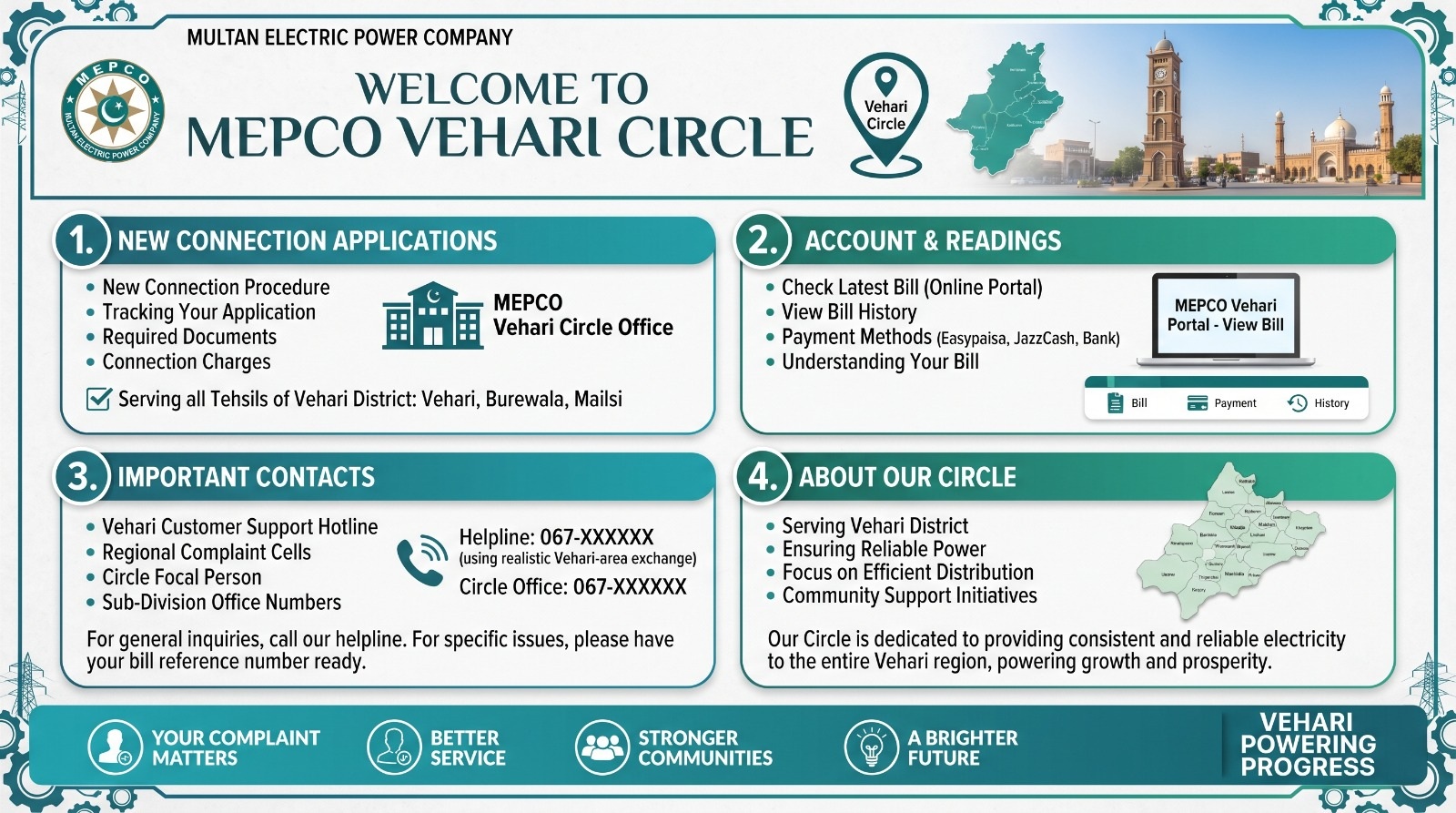
Vehari District – Three Tehsils Under MEPCO
Vehari district splits into three tehsils, each with a distinct character:
|
Tehsil |
Character |
Key Detail |
|---|---|---|
|
Vehari |
Urban & semi-urban |
District headquarters, closest to Sutlej River |
|
Burewala |
Commercial & industrial |
Major hub for textile and cotton ginning activity |
|
Mailsi |
Rural & agricultural |
Largest tehsil by area, split between Mailsi city and Jallah Jeem |
Knowing which tehsil your connection falls under is the first thing worth having ready before contacting MEPCO — it determines which subdivision office actually manages your account.
Why Cotton and Textiles Shape Billing in Vehari
Vehari’s local economy runs heavily on cotton — growing it, ginning it, and increasingly processing it into textile products, particularly around Burewala. This has a direct effect on the kind of connections MEPCO manages across the district.
Industrial tariffs for ginning and textile operations.
Ginning factories and textile units carry industrial or commercial tariff structures that look nothing like a residential bill. Different slab rates, different peak-hour considerations — all tied to when these operations actually run their machinery. If you are new to running this kind of business, do not expect your bill to follow household billing logic. It will not, by design.
Seasonal cotton-season demand spikes.
Ginning activity ramps up sharply during and just after the cotton harvest, and electricity demand on feeders serving these factories follows that same seasonal curve. A jump in a commercial or industrial bill during this window almost always reflects genuine higher operational usage — not a billing error.
Tube-well billing across the agricultural belt.
As in other MEPCO districts with a strong farming base, agricultural tube-well connections are billed under a separate category from residential use. Mailsi’s rural stretches in particular carry a large volume of this connection type — and getting the category wrong is a fixable but recurring cause of billing disputes.
Common Billing Issues in Vehari District
|
Issue |
Who It Affects |
What To Do |
|---|---|---|
|
Industrial peak-hour charge confusion |
Ginning & textile operators |
Compare bill against your own production schedule for that month |
|
Estimated readings in remote areas |
Rural Mailsi chaks and Jallah Jeem |
Submit correction request with a clear meter photo |
|
Tariff category mix-up |
Agricultural households with tube wells |
Confirm both domestic and tube-well connections are billed correctly |
|
Voltage fluctuation complaints |
Residential areas near Burewala industrial zones |
Report via CCMS portal with feeder details |
|
Missed due date on business accounts |
Seasonal ginning/textile operators |
Save reference number and set a monthly reminder to check online |
Where to Take a Local Issue
Start with the subdivision office covering your tehsil — Vehari, Burewala, or Mailsi. For most routine problems — a wrong reading, an installment request, a meter fault — this is faster than trying to escalate to circle level first. Reserve escalation for cases where your subdivision has genuinely failed to act after you have already gone through the normal process.
Because Burewala carries a heavier concentration of industrial and commercial connections than the other two tehsils, its subdivision handles a very different complaint mix compared to the more residential and agricultural profile of Vehari tehsil or Mailsi.
How to Pay Your MEPCO Bill in Vehari
You do not need to be physically present in Vehari to pay your bill. All standard channels work from anywhere in Pakistan using your reference number:
- Easypaisa or JazzCash mobile wallets
- Mobile banking apps (any major bank)
- Bank branch counter payment
- MEPCO payment counters directly
How to File a Complaint From Vehari
The centralised MEPCO CCMS portal covers Vehari the same as every other district in the network. A few things worth doing specifically here:
- Specify your tehsil (Vehari, Burewala, or Mailsi) clearly — Mailsi’s size in particular means a vague location slows down complaint routing
- For industrial or commercial complaints tied to ginning or textile operations, note your connection type upfront — these accounts need a different reviewer than a standard residential complaint
- Keep your complaint ticket number for follow-up, especially for accounts in remote parts of Mailsi where a phone call may be more practical than waiting on the portal
Practical Tips for Vehari MEPCO Consumers
- Track your own seasonal usage pattern if you operate a ginning or textile business — comparing your bill against your production schedule during cotton season makes it easy to tell a genuine spike from an actual error
- Confirm your tariff category if you run agricultural land with a tube well — this is the most recurring, easily fixed source of billing disputes in this district
- Know your exact tehsil, especially if you are in Mailsi — specify whether you are in Mailsi city or Jallah Jeem, as this genuinely speeds up how your case gets handled
- Keep business account reference numbers as carefully tracked as household ones — industrial connections tied to seasonal operations are easy to lose track of between harvests